
Large-scale Health Monitoring and User Behavior Analysis
Published:
Duration: 2025 – Present
Role: Lead researcher of work package 4: smart data for data analysis and predictive modeling.
Collaborators: Menzis (Dutch health insurance company); Prof. dr. Claudine Lamoth (Professor of Movement Analysis & Smart Technology in Aging, Dept. of Human Movement Sciences, UMCG).
Overview
This project centers on the SamenGezond (“Healthy Together”) platform, a large-scale preventive health program operated by Menzis. Launched in July 2012 as a website and expanded with a mobile app in October 2017, the platform promotes healthy behaviors across physical activity, nutrition, mental health, sleep, and stress management through a points-based reward system.
The figure below illustrates the end-to-end data pipeline: multimodal data from 5 sources (app usage, mHealth sensors, email engagement, surveys, and clinical demographics) are ingested via Azure Pipelines into a Data Management Platform for aggregation, anonymization, and ETL. Processed data flows into Databricks for feature engineering and ML pipelines, supporting four downstream task categories: prediction (churn, health forecasting, hospitalization risk), classification (user segmentation, risk stratification), anomaly detection (health anomalies, behavioral change, early warning), and recommendation (personalized interventions, nudge optimization, goal setting).
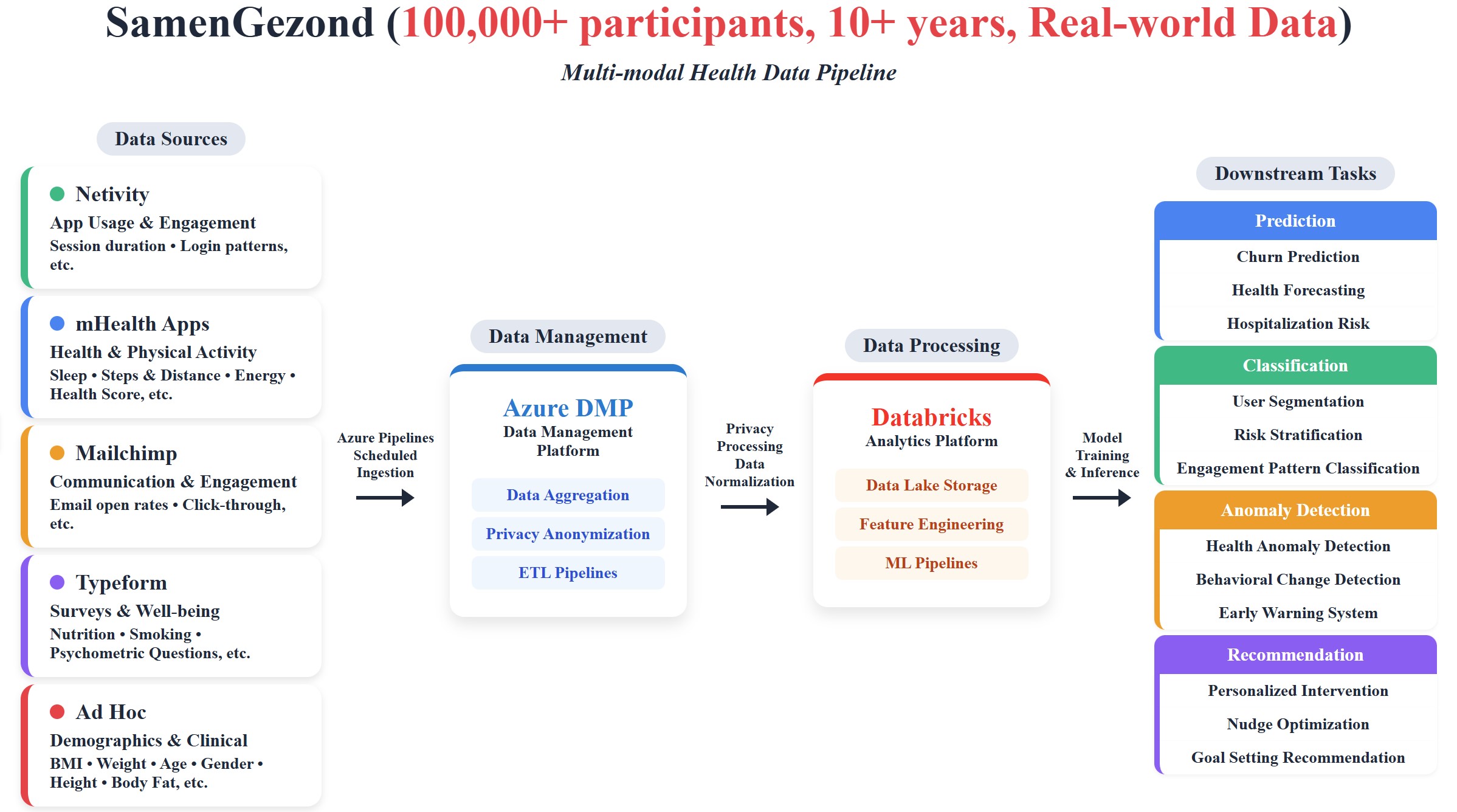 Figure 1. SamenGezond multi-modal health data pipeline: from data sources through Azure and Databricks to downstream ML tasks.
Dataset
- Observation period: July 2012 – September 2022 (over 10 years)
- Participants: 100,000+ participants, aged 18–80, 56% female
- Average enrollment duration: ~3.6 years per participant
- Temporal granularity: Weekly
Data modalities include:
- Demographics (age, gender)
- Wearable sensor recordings (physical activity, sleep, heart rate)
- Health surveys and questionnaires
- Platform interaction logs (goal-setting, AI coaching, social challenges)
- Insurance records
- Neighborhood-level socioeconomic status (NSES), derived from 9 indicators via the Dutch Central Bureau of Statistics
- Marketing campaign temporal markers (radio, TV, web)
The bubble chart below compares SamenGezond against 34 other health datasets across three dimensions: number of participants (x-axis), observation duration (y-axis), and number of data modalities (bubble size). SamenGezond stands out with its combination of large participant count (100,000+), long duration (10+ years), and high modality richness (26 modalities).
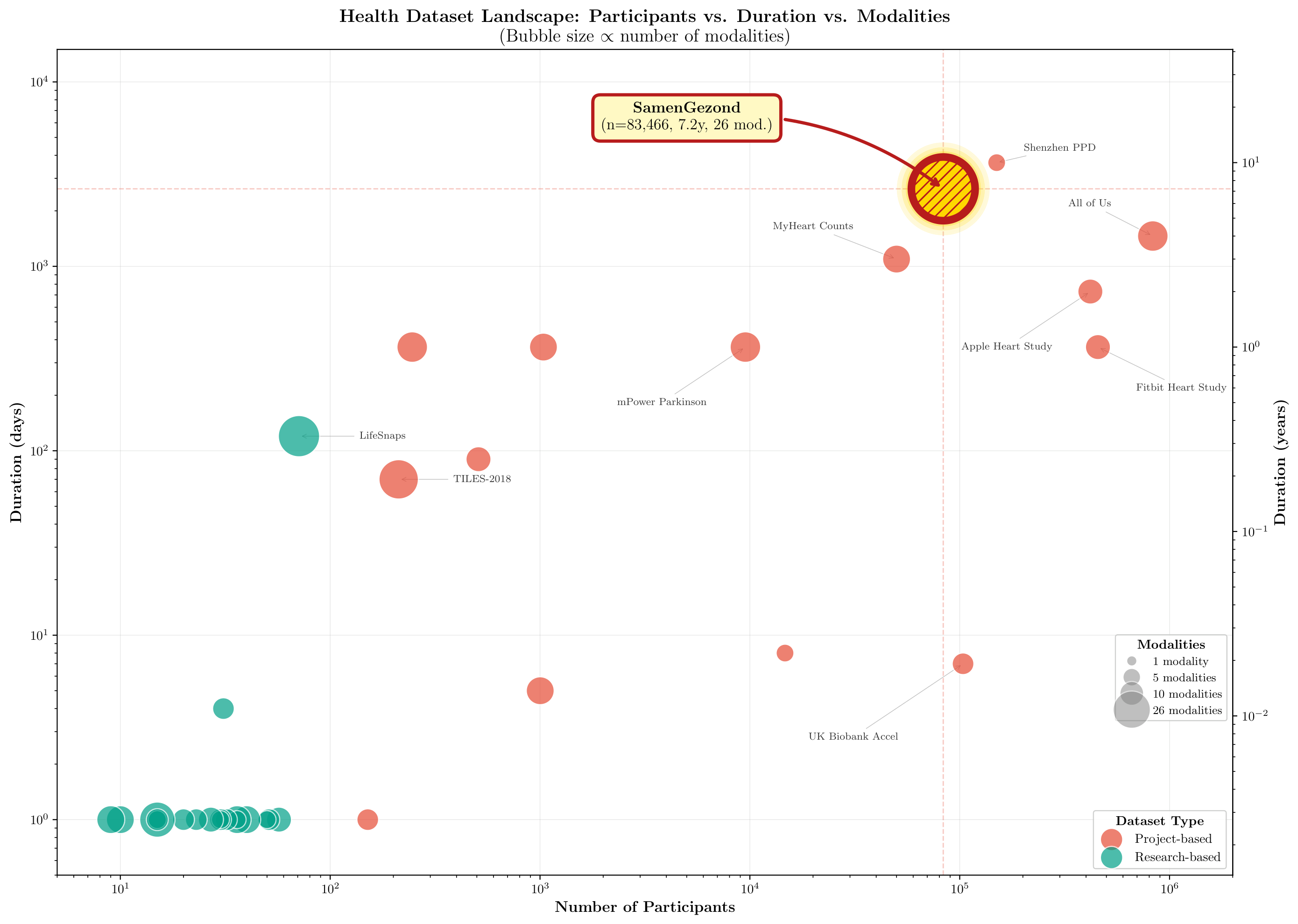 Figure 2. Health dataset landscape comparing participants, duration, and modalities. SamenGezond (highlighted) combines large scale, long duration, and high modality count.
The table below summarizes participant demographics across the pre-training, downstream activity, and downstream metabolic task splits, covering sex, age, and BMI distributions.
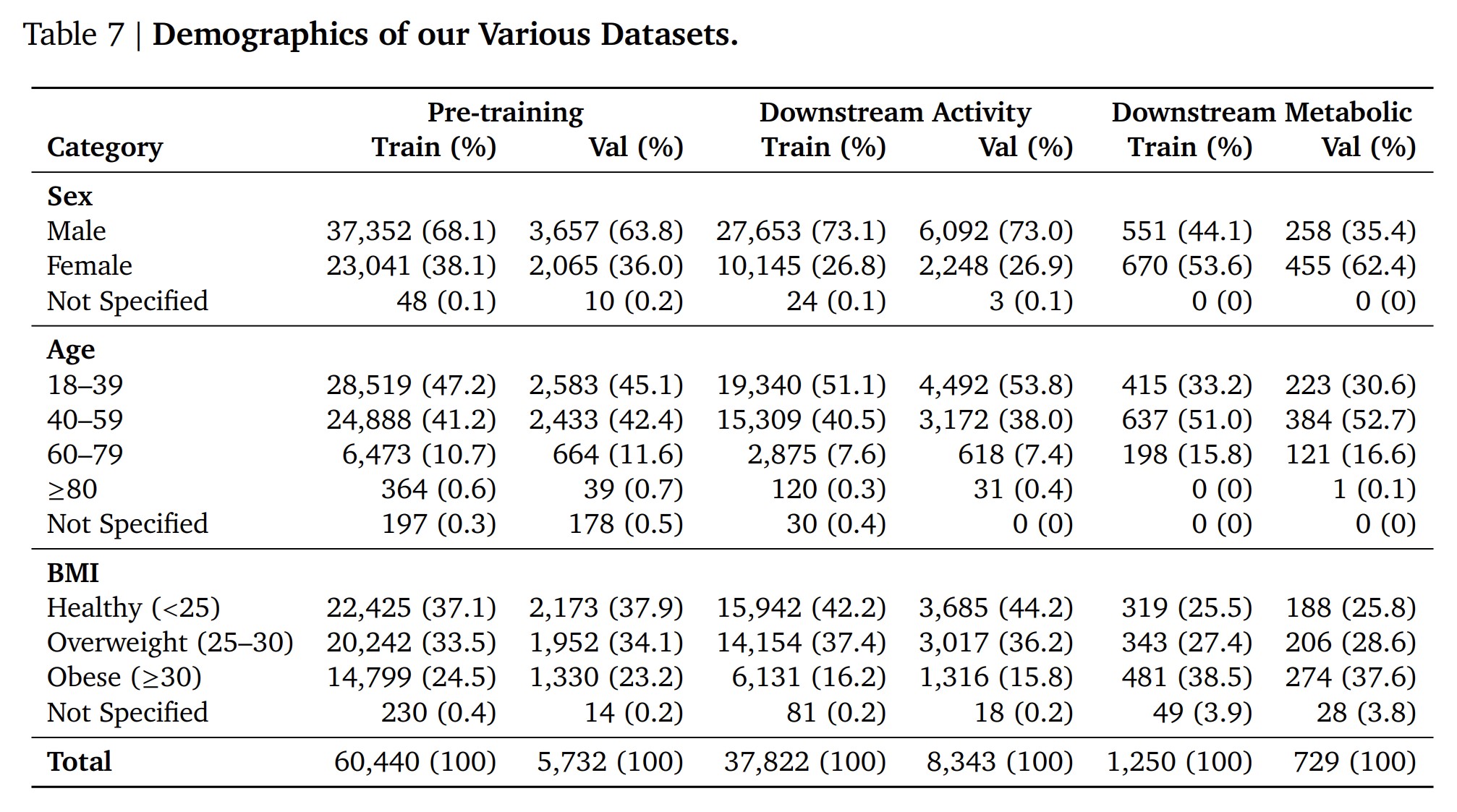 Figure 3. Demographics (sex, age, BMI) across pre-training and downstream task datasets.
Participant Typology
Four distinct adoption types were identified based on when participants enrolled on the website and whether they subsequently adopted the mobile app after its October 2017 launch:
- Type 1 (32.2%): Enrolled before app launch, website only
- Type 2 (37.5%): Enrolled before app launch, later adopted the app
- Type 3 (15.6%): Enrolled after app launch, adopted both website and app
- Type 4 (14.7%): Enrolled after app launch, website only
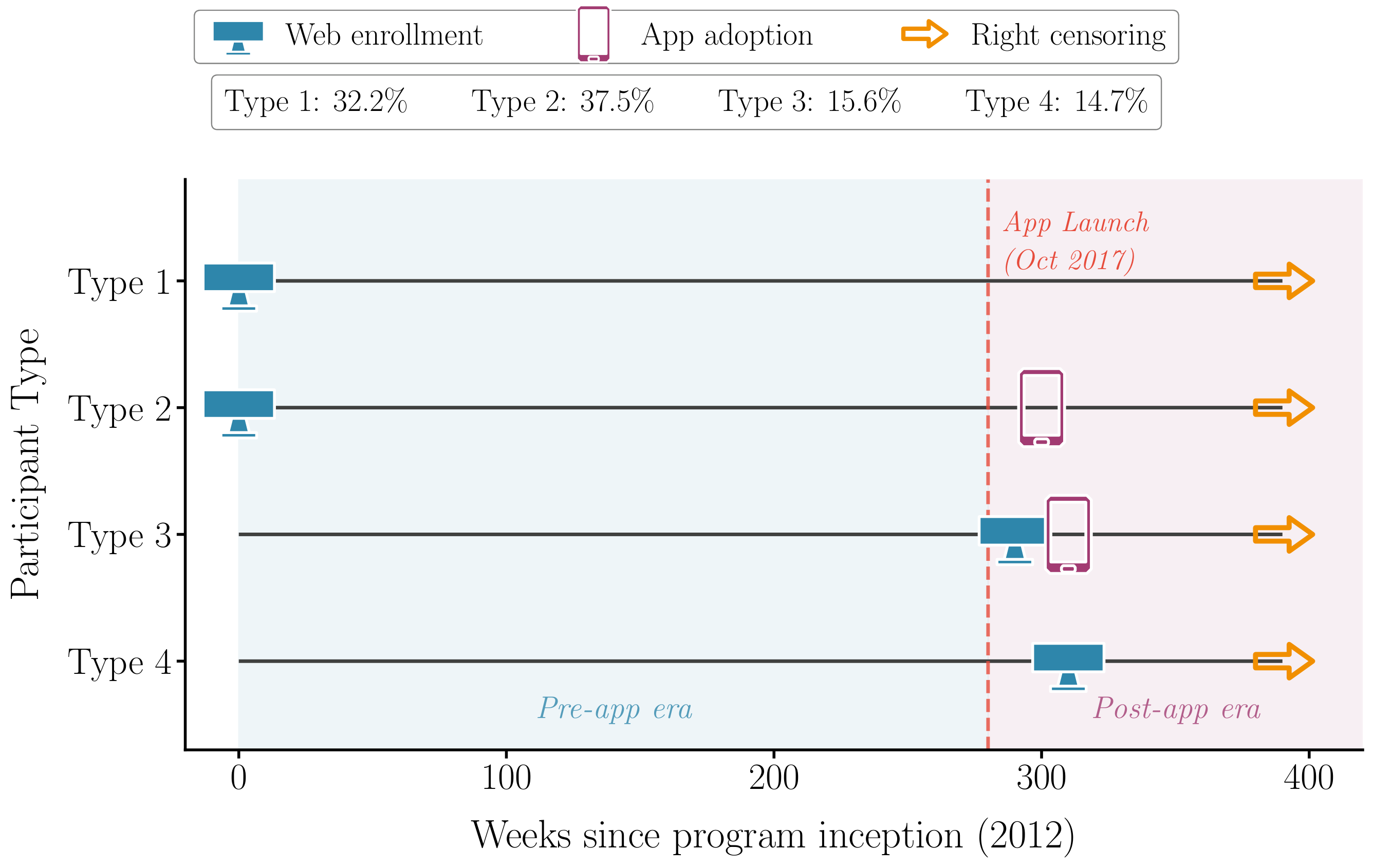 Figure 4. Participant adoption typology across the pre-app era (2012–2017) and post-app era (2017–2019), showing web enrollment, app adoption timing, and right censoring.
Key Characteristics
- Socioeconomic stratification: Participants stratified into NSES quintiles, enabling analysis of health behavior adoption across socioeconomic segments.
- Naturalistic design: Observational (non-experimental), capturing genuine user decision-making and adoption behaviors.
- Ethics: Voluntary informed consent; IRB-approved by the University of Groningen; reported following STROBE guidelines.